You, explained.
What a comprehensive genomic read looks like in real life. Two people with the same fear and two different roads. Two men with the same number on a lab report, for two different reasons. The card your prescriber will actually use. And the three programs it all comes in, without the prices.
Where should I send it?
The brochure arrives in your inbox in a minute or two. No spam, and you can unsubscribe any time.
The labs came back normal. The read explained why you still feel this way.
Every story in the brochure is a composite of real clients, with the details changed. Each one starts the way people arrive at my desk: with a symptom, a family history, or a fear that nothing on the lab report accounts for. The read shows which tendencies are consistent with how they feel, and what to bring to their physician.
Both had a parent who developed dementia. The read sent them down two different roads.
Same testosterone number, two different reasons, two different answers.
"Should I be on HRT, and how would my body handle it?"
Same performance review, year after year. Opposite wiring.
A genetic result is not a list of genes. It starts with who you are.
The whole answer, before you buy anything.
- Stay well, or get back to well. The two reasons people come to me, and the same read that serves both.
- Where the line is. What a predisposition is and is not, read twice.
- How I read you. Two axes, four baseline patterns, and the one that is you.
- Four feature stories: the long game, hormones in men, hormones in women, and how you process feedback.
- The medication card that tells any prescriber how you metabolize, and the document that goes with it.
- What you open: the portal, the reports, and the Personal Overview, with a sample page.
- The three programs, what each includes, and one way in: fifteen minutes with me, free.
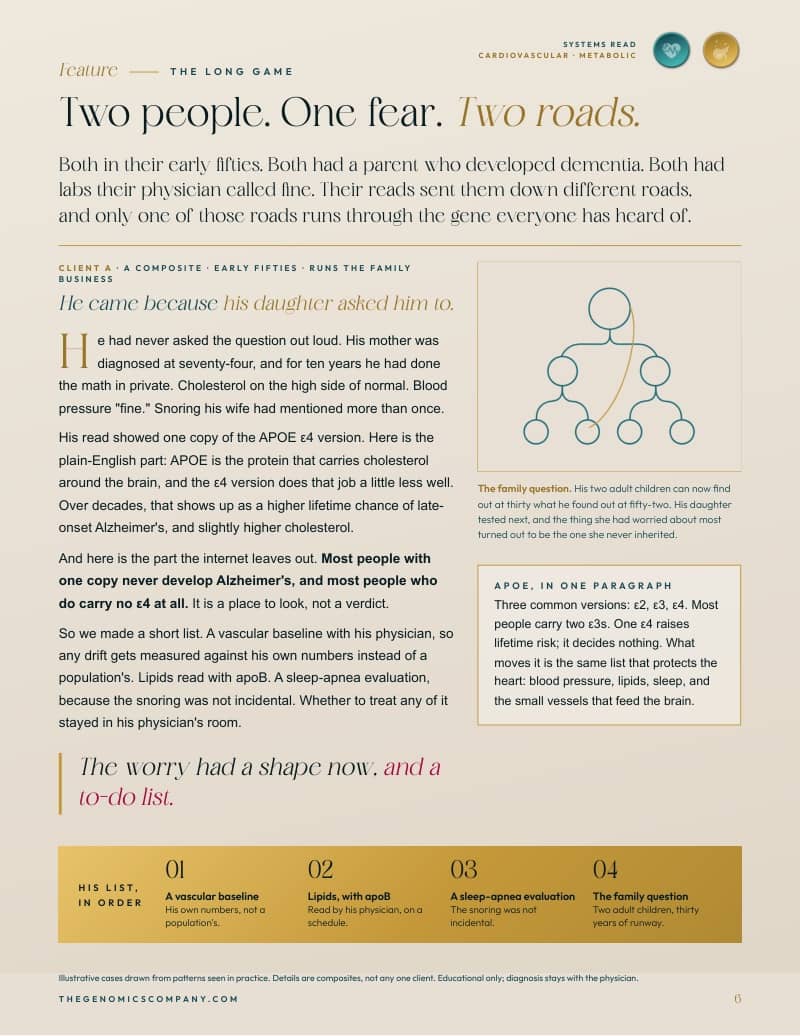
Two people. One fear. Two roads.
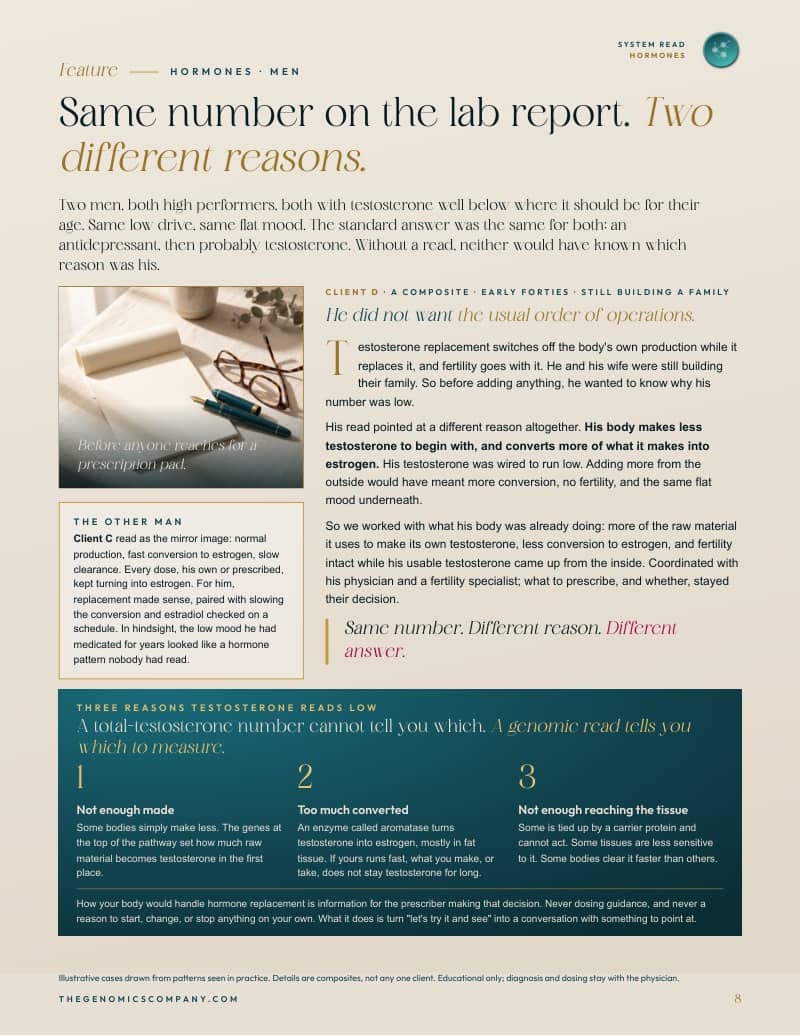
Same lab number, two reasons
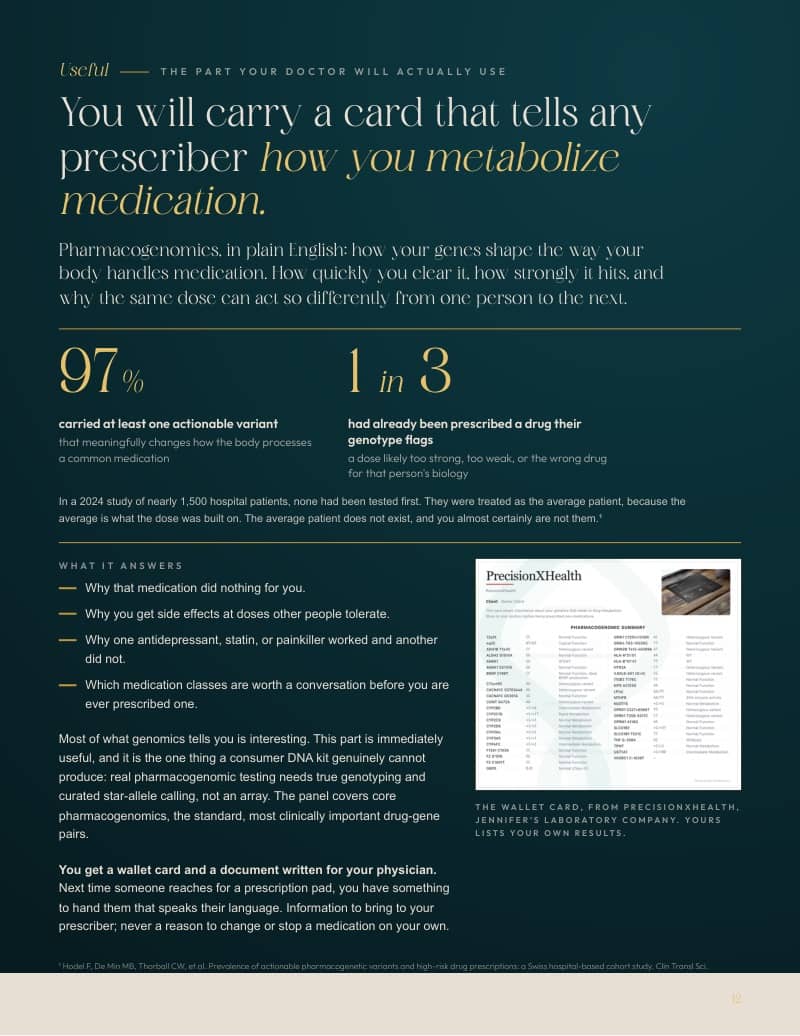
The part your doctor will use
Decoding is where testing companies stop. It is where I start.

The brochure is the piece I hand across a conference table. It carries no prices on purpose: the programs are in there, and which one fits you is a fifteen-minute conversation, not a checkout. Every claim in it is probabilistic, and every story ends with what to ask your physician.
Jennifer Little-Fleck, CFGP, BcID. Executive Biologist and Certified Functional Genomic Practitioner, with three decades in healthcare sales, research and medical writing. Specializes in connecting mood and behavior genetics to overall health.
The first step isn't a plan. It's a read.
Educational, not medical advice. For questions about a diagnosis or a medication, talk with your physician.