Why your gut overreacts.
Bad food, nerves, leftovers, your cycle: the same alarm system answers all of them. A plain-English guide from a biologist on how your gut's alarm works, why yours may go off more easily, and what helps.
Where should I send it?
The guide is yours the moment you sign up. No spam, and you can unsubscribe any time.
No test needed to read it. If you already have a genomic report, it will make a lot more sense afterward.

Some guts shrug things off. Others sound the alarm.
Your gut runs a real alarm system: sentry cells that release serotonin, nerves that carry the message, cleanup crews, and smoke detectors that release histamine. Genes help set how well staffed the crews are, stress tunes how sensitive the alarms are, and hormones shift how much buffer you have. Once you see the system, a lot of frustrating patterns start to make sense.
Why the same meal is fine one day and not the next.
Why leftovers bother you when the fresh meal didn't.
Why nerves send you to the bathroom before a big moment.
Why things changed around perimenopause.
It is not "just your stomach," and it is not all in your head. The nerves really are firing, and every part of the alarm can be tuned.
Five questions sketch your pattern. Your answers point to your first step.
The guide walks you through five questions, then gives you a one-page gut alarm map to fill in. When you finish, you know whether to start by lowering what comes in, calming the alarm, or tracking your cycle, plus the first thing to change and the question to bring to your doctor or health coach.
- What sets it off? A meal, your nerves, or no clear pattern at all.
- Does it follow your cycle, or your stage of life? Before a period, in perimenopause, or after menopause.
- Do leftovers, aged cheese, wine or cured meats bring flushing, headache or hives? The histamine question.
- Do onions, garlic, beans or broccoli stalks bring gas and bloating? The fermentable carb question.
- What do your genes say about your crews? DAO, GSTM1 and the serotonin transporter.
The answers up front. Then the why, and what to do.
Answers first. Page 3 answers 18 questions people actually ask, from "Why does bad food send me running so fast?" to "Is IBS all in my head?", each with the page that explains it.
- Meet the alarm system. Who does what in your gut, in plain names.
- Serotonin, stress and the nervous bathroom run. How your gut and brain really talk.
- Histamine, cleanup crews and sulfur foods. Why it is a bucket, not one food.
- Perimenopause, menopause and DHEA. What hormones do to the alarm.
- Where IBS fits. The same alarm, set too sensitive.
Then, what to do with it. Plain English, and sourced so a skeptic can check it.
- Your five questions, and a one-page gut alarm map to fill in.
- What you can do: fill the bucket slower, calm the alarm, and test before you cut foods for good.
- When to see a doctor, clearly listed, so nothing important gets missed.
- The sources, on two pages: more than 60 studies and guidelines.
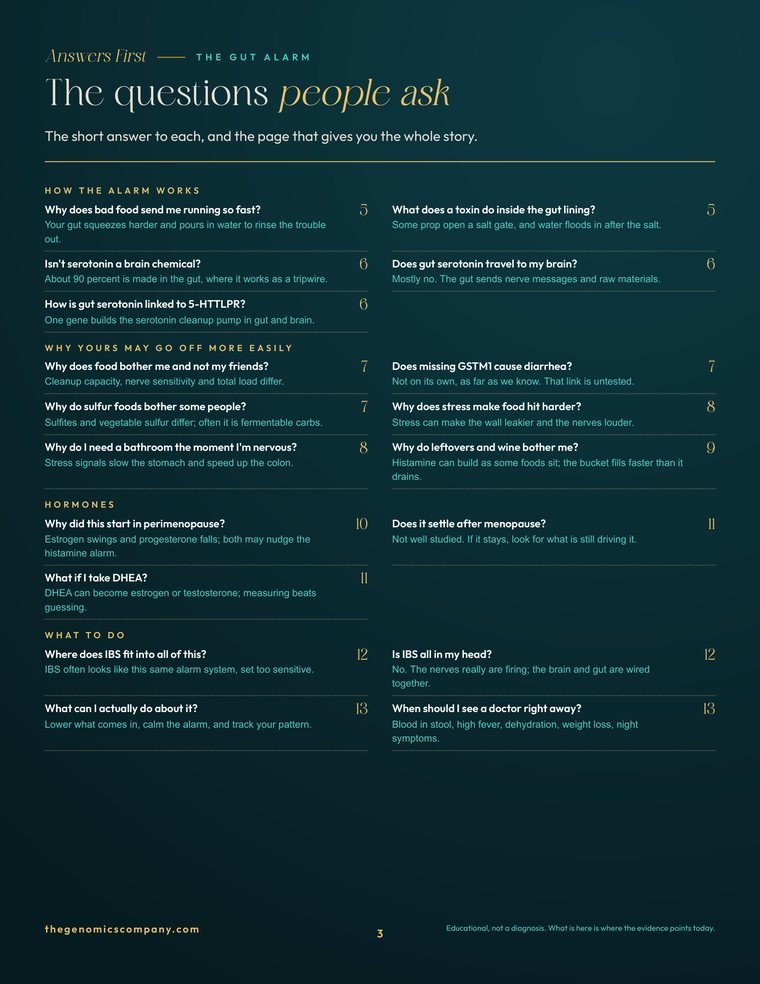
Answers first
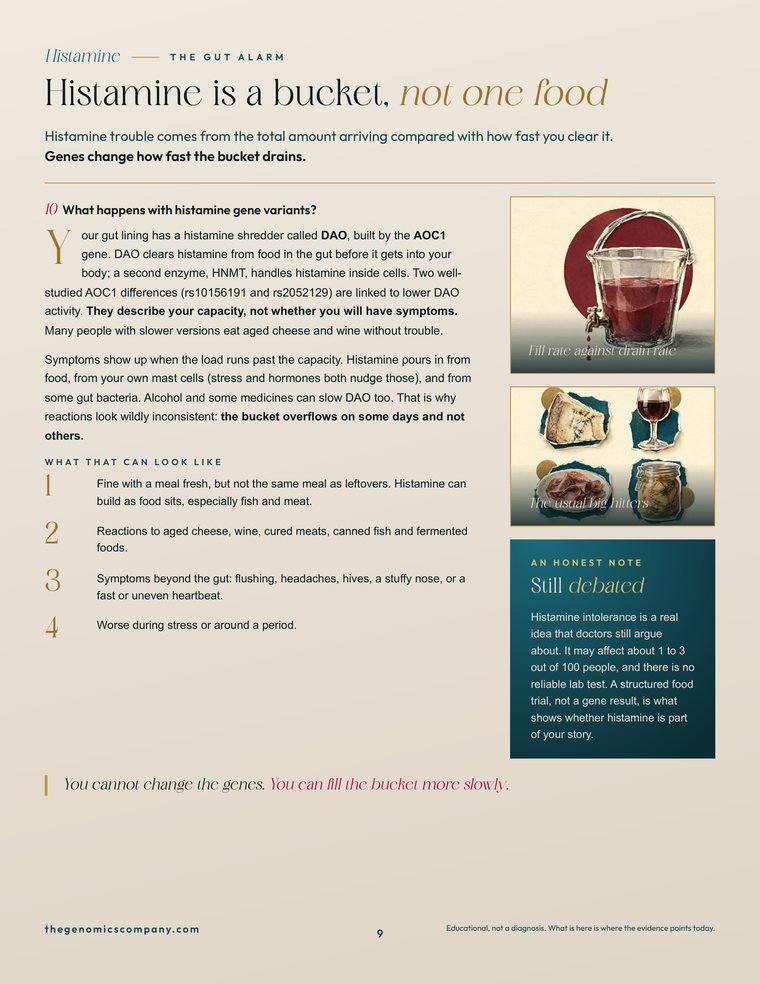
Histamine, explained
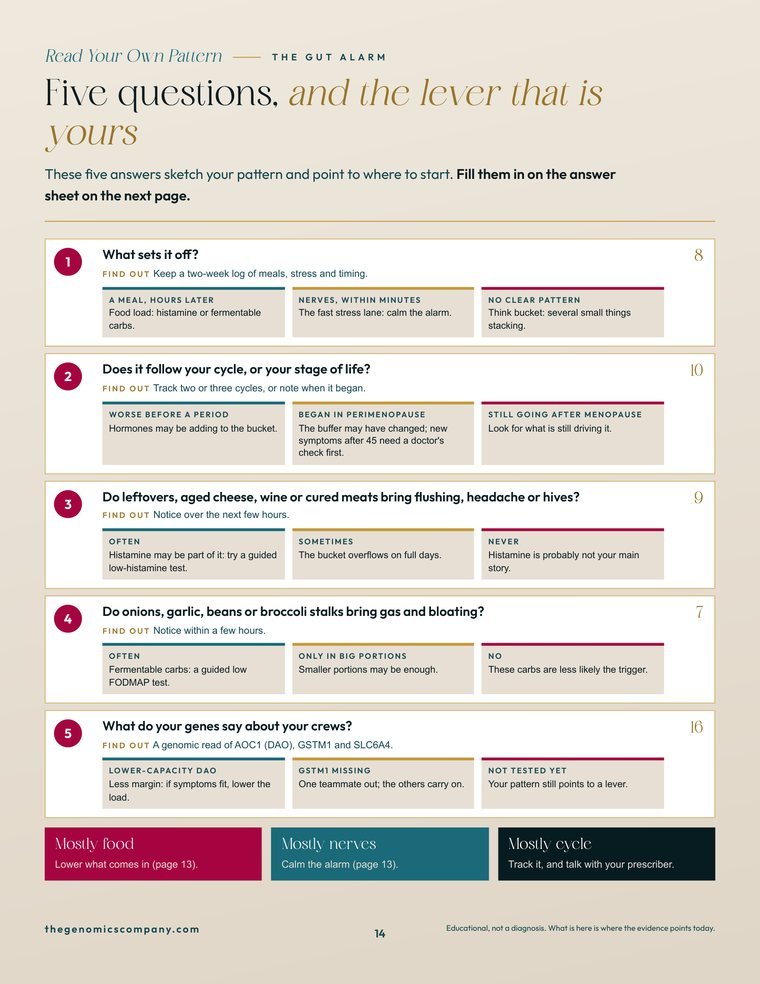
Your five questions
Where the science is settled, and where it is still moving.
Every claim in this guide was checked against the research, and the guide tells you which findings come from people and which come from the lab. So you can feel good about what you know.
Settled
About 90 percent of the serotonin in your body is made in the gut, where it works as a tripwire, not a mood chemical.
Strong, in people
The stress of giving a public speech made the gut leakier for a short time, through a stress signal and the gut's own mast cells.
Still open
How hormones change histamine clearance, and whether a missing cleanup gene makes the alarm easier to trip. The guide says plainly what is not yet known.
I researched and read the science for a living. Now I teach it and interpret it for you personally.
Whichever part of your body you want to understand, from mood and sleep to hormones, detox and the heart, I teach you how your genes tend to shape it and interpret your results with you personally, so the foods, habits and questions you bring to your doctor fit how you are built.

Jennifer Little-Fleck, CFGP, BcID. Executive Biologist and Certified Functional Genomic Practitioner, with three decades in healthcare sales, research and medical writing. Specializes in connecting mood and behavior genetics to overall health.
This story touches a handful of genes. Your genome holds a great deal more worth reading.
The histamine shredder, the cleanup crew and the serotonin transporter in this guide are part of a full genomic read. If you are interested in getting your DNA tested and joining a masterclass where we walk through the results together, book a quick conversation and we will get your test ordered.
There is no such thing as average. We help you read the plans that are yours.
The answers you have been looking for. And what to do with them.
Free; sign up above and it is yours right away. For education; it describes tendencies, not a diagnosis.